gimicCore is a modular FiveM roleplay framework packaged as one standalone resource. It can be installed into an existing server to provide essential roleplay systems without requiring a complete server base or replacing your current framework.
Each module can be configured, enabled, or disabled independently, allowing server owners to build around the features they need. The resource includes law enforcement tools, gang interactions, robberies, player identity systems, weapon mechanics, restrictions, administrative tools, and quality-of-life features in a scalable, performance-focused package.
$89.99
Protected by Cfx.re asset escrow
Enable or disable individual systems independently instead of installing and maintaining multiple disconnected resources.
Includes duty management, restraints, escorting, jailing, community service, hostage interactions, gang tools, loadouts, and synchronized duty blips.
Configure banks, stores, jewelry cases, rewards, skill checks, police requirements, cooldowns, and live law enforcement alerts.
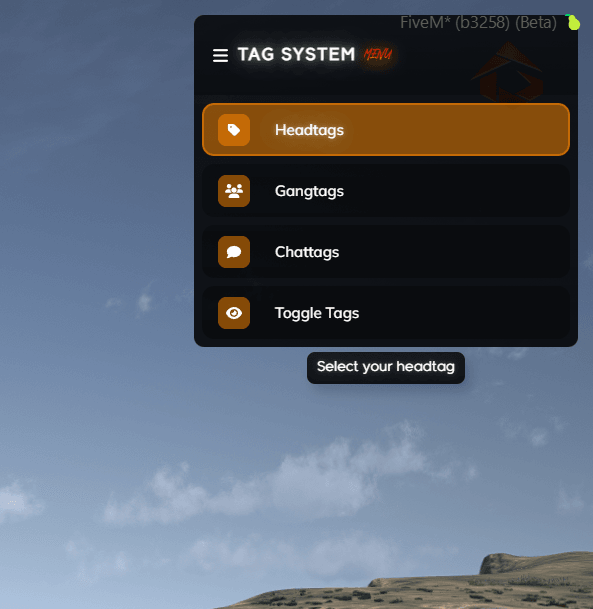
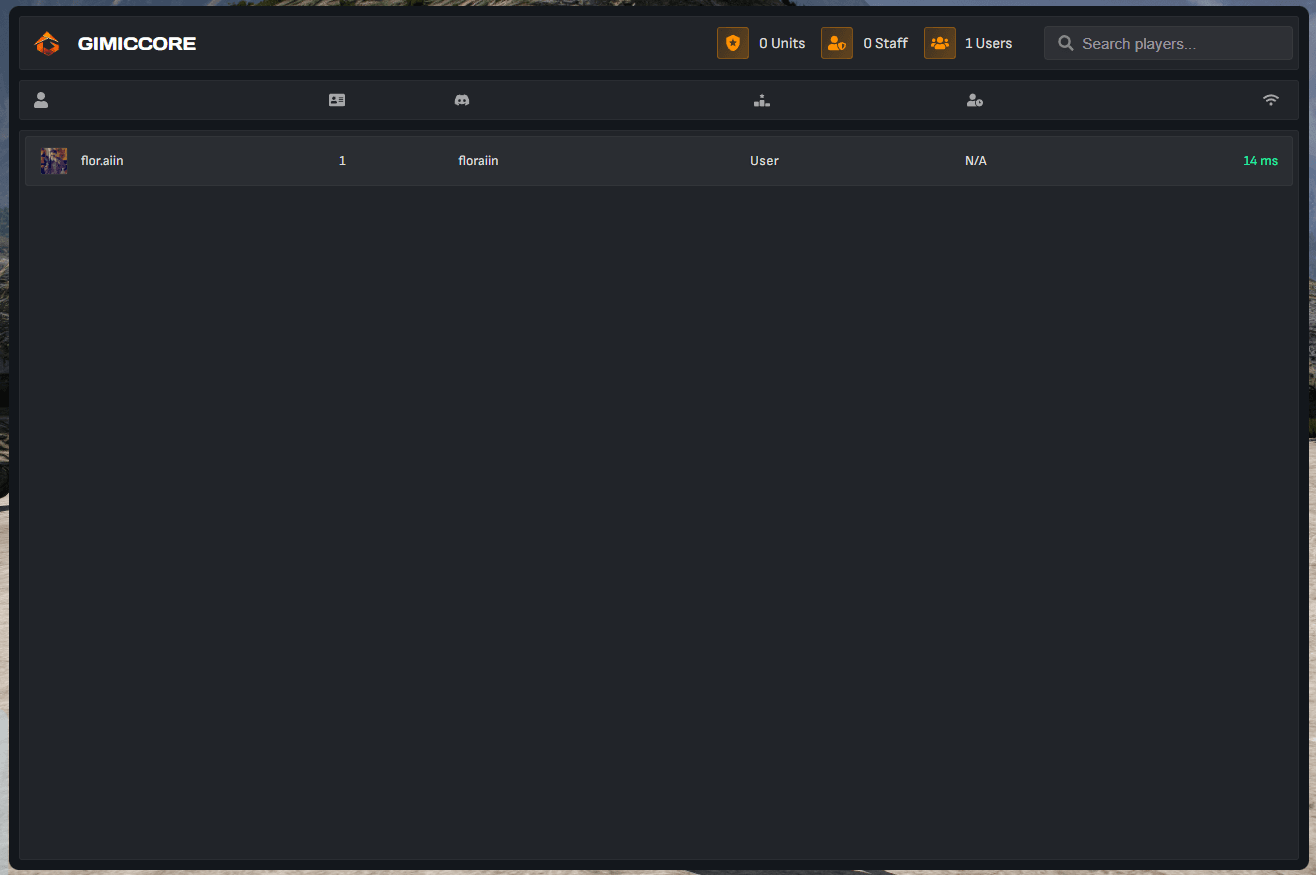
Adds a scoreboard, Discord-based headtags and chat tags, custom chat channels, death screens, revive zones, and player information systems.
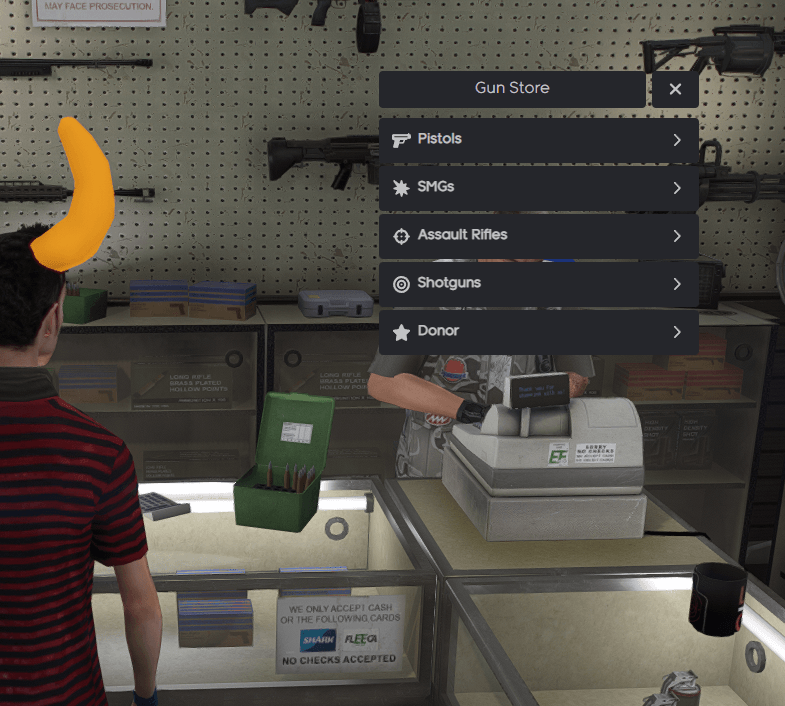
Supports weapon slings, draw and holster animations, trunk weapon restrictions, component swapping, surrender animations, and weapon dropping.
Core Pack, also known as gimicCore, is a standalone FiveM resource designed to provide a collection of essential roleplay systems through individually configurable modules.
It is not a complete server base and does not include full server files. It can be added to an existing server so you can use selected systems without replacing the rest of your setup.
Each module can be enabled, disabled, and configured independently, allowing the resource to scale from a small collection of utility features into a broader roleplay framework.
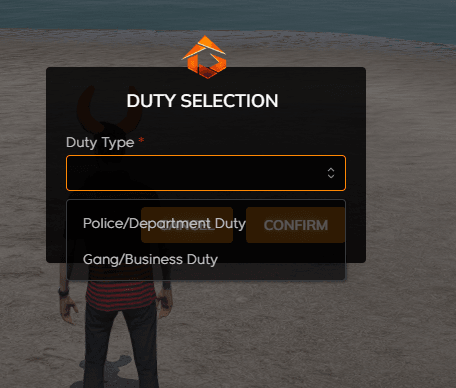
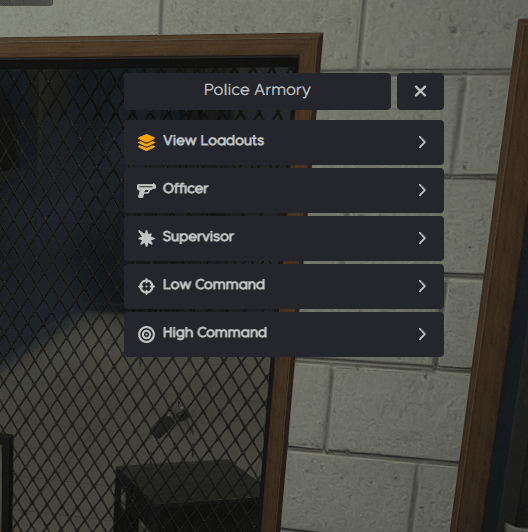
The duty system supports law enforcement, government departments, civilian roles, and other configurable groups. Players can clock on and off duty while the system manages permissions, department status, loadouts, and supported Discord role requirements.
Department-specific loadouts can automatically be issued when a player clocks in. On-duty personnel can also be displayed through synchronized map blips that update in real time.
Law enforcement tools include hard cuffs, soft cuffs, dragging, escorting, placing players into vehicles, removing players from vehicles, unmasking, jailing, and sending players to configured corner or community service activities.
The restraint system supports persistent state, allowing handcuffs and other configured restraints to remain active when a player disconnects and reconnects.
Gang and criminal interaction tools include zipties, headbags, hostage-taking, cuff lockpicking, dragging, escorting, and supported vehicle interactions.
Hostage actions can require a configured weapon, while individual tools can be limited by roles, permissions, items, or other server-defined conditions.
Looking for something else? Browse the store.
Players can push vehicles, repair at configured locations, place props, use vehicle commands, and access role-restricted teleport locations.
Control weapon access, vehicle access, and speed limits using configurable Discord roles or server permissions.
Includes Discord permissions, webhook logging, trusted-player bypasses, staff duty, mass vehicle wipes, and emergency call management.
Provides shot-spotter alerts, traceable VPN identities, police security cameras, hit registration controls, and persistent restraint data.
Lightweight modular code, latency-aware synchronization, configurable Lua settings, and documented events and exports for developers.
The configurable tackle system allows authorized players to tackle nearby targets using a dedicated keybind.
Server owners can configure who may use the system, its controls, cooldowns, distance requirements, and other supported behavior.
The jail system supports persistent sentences, configurable jail locations, escape detection, sentence tracking, and release behavior.
Community service can be used as an alternative punishment through configurable task locations and completion requirements.
Handcuffs, zipties, and supported restraint states can be saved when a player disconnects. When the player reconnects, their restraint state can be restored automatically.
This prevents restrained players from avoiding roleplay situations simply by leaving and rejoining the server.
The shot-spotter system detects configured gunshots and sends real-time alerts to on-duty law enforcement personnel.
Server owners can configure alert cooldowns, map blip radius, blip duration, notification behavior, and weapon blacklists for items such as tasers, flare guns, and other weapons that should not trigger an alert.
Players can use the /vpn command to mask their identity behind a generated roleplay IP address.
Law enforcement personnel can access configured VPN terminals to trace an IP address and receive a last-known-location waypoint for investigative roleplay.
IP generation ranges, trace locations, permissions, trace cooldowns, and supported notifications can be customized.
The security camera system allows authorized law enforcement personnel to view configured cameras at banks, stores, government buildings, and other important locations.
Cameras support rotation and smooth transitions between viewing angles. Camera knowledge can also become part of criminal planning during robberies and other roleplay scenarios.
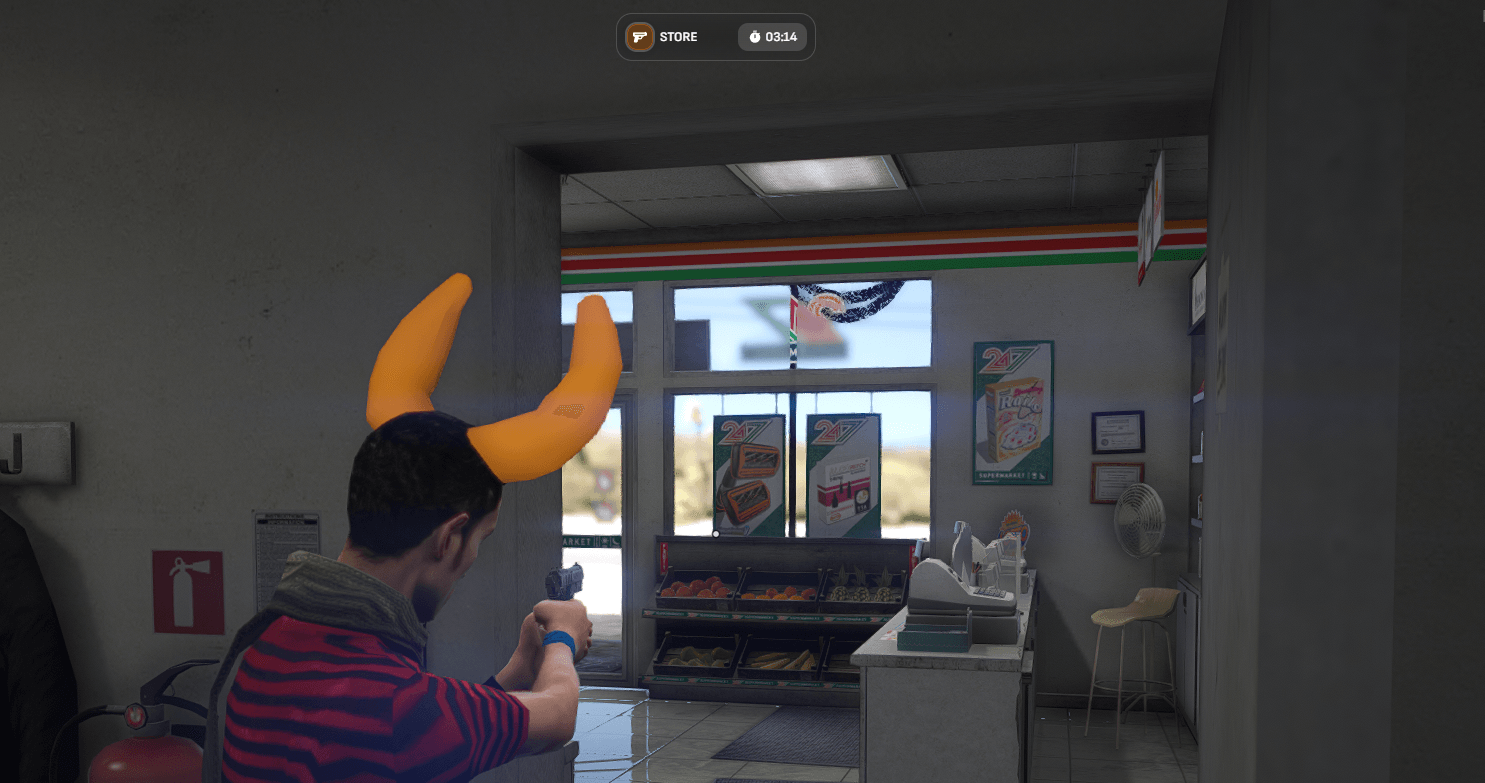
The configurable robbery system supports banks, stores, and other server-defined locations.
Each robbery can include a skill-check minigame, minimum on-duty police requirement, randomized reward range, cooldown, and real-time police notification.
Locations, required items, rewards, notification settings, police requirements, and cooldown values can be adjusted independently.
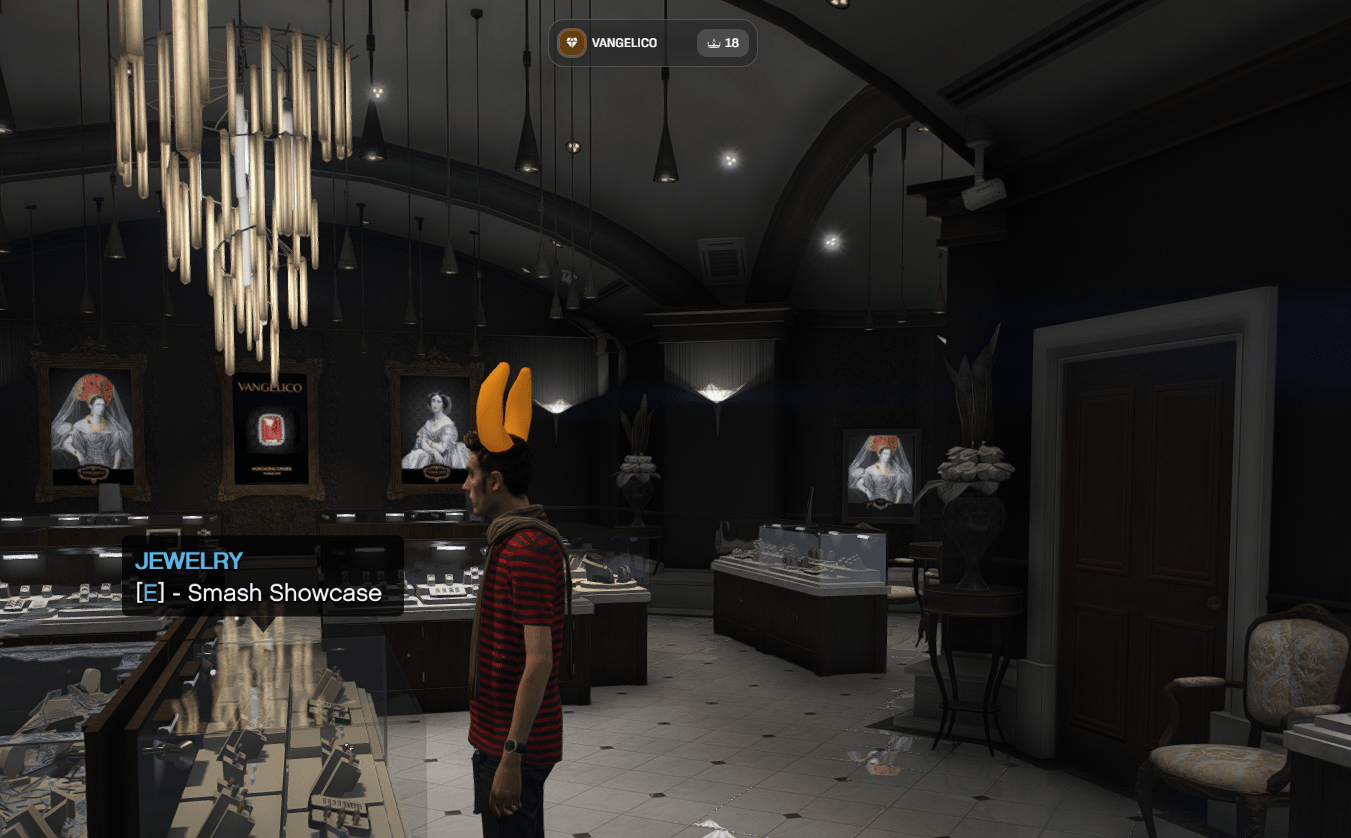
The jewelry store robbery includes animated cabinet smashing across multiple display cases with individually configured positions.
Server owners can configure the police requirement, robbery cooldown, rewards, animations, cabinet locations, and supported law enforcement alerts.
The custom scoreboard provides a live player list with supported Discord tag visibility, department duty counts, server information, and configurable player details.
Visibility and displayed information can be restricted based on roles, permissions, or server preferences.
Dynamic player headtags can display role information based on configured Discord roles.
The system supports role-based styling, configurable tag priority, gang tags, staff identifiers, visibility distances, and other supported display options.
Chat tags can be assigned through Discord roles or server permissions, allowing staff, departments, supporters, gangs, and other groups to display unique prefixes.
Tag text, colors, role priority, and permission requirements can be configured for each group.
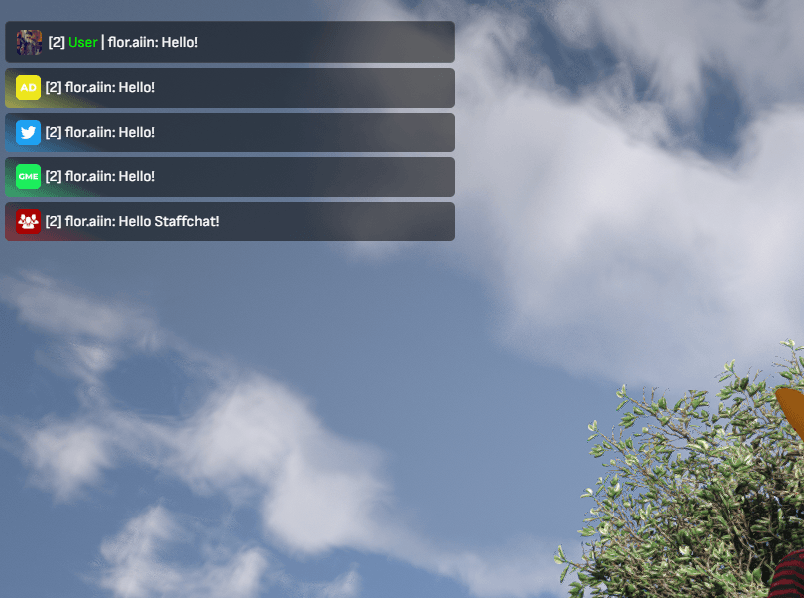
The custom chat system includes Twitter, VPN chat, advertisements, staff chat, and a global /me command.
Each chat channel can have its own formatting, cooldowns, permission requirements, logging settings, identity behavior, and visibility rules.
The death screen provides a custom respawn interface with a configurable bleedout timer and multiple hospital locations.
Server owners can control respawn behavior, hospital selection, timers, interface text, restrictions, and supported revival conditions.
Revive Zones are configurable areas where players can help incapacitated players return to active roleplay.
Locations, zone sizes, interaction times, animations, permissions, and other supported requirements can be configured for each zone.
The weapon sling system allows supported rifles and other large weapons to appear across a player's front or back when they are not actively equipped.
More than 2,200 weapon configurations are supported, with configurable models, positioning, rotations, and sling behavior.
Custom draw and holster animations can be assigned to supported weapons, jobs, departments, and duty states.
The system can also swap clothing components when a player equips or holsters a weapon, allowing visible duty belts, holsters, or related equipment to change between on-duty and off-duty states.
The trunk weapon system can prevent players from carrying configured large weapons unless they retrieve them from a vehicle's trunk.
Weapon lists, vehicle requirements, access conditions, animations, and supported storage behavior can be customized.
Players can activate a surrender animation using a configurable keybind.
The animation can be interrupted or restricted based on movement, weapons, vehicle state, restraints, and other configured gameplay conditions.
Players can push disabled or broken vehicles using an interaction powered by ox_target integration.
The system supports configurable interaction points, movement behavior, vehicle restrictions, and supported access conditions.
Configured mechanic locations allow players to repair damaged vehicles through an interaction and timed repair process.
Each repair can display randomized roleplay messages and support configurable pricing, locations, restrictions, animations, and repair durations.
The prop system allows authorized players to spawn and place objects such as cones, barriers, signs, and police equipment.
Available props, permissions, placement controls, object limits, and cleanup behavior can be configured by the server owner.
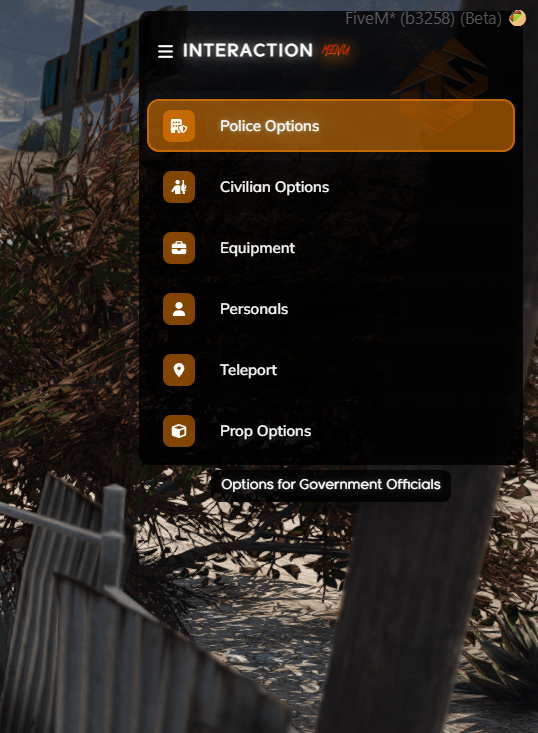
The teleport menu provides quick access to configured locations such as police departments, hospitals, government buildings, training areas, and other server-defined destinations.
Access can be restricted to law enforcement departments, staff members, specific Discord roles, or other configured groups.
Core Pack includes utility commands for commonly used vehicle and player interactions.
Role-based speed restrictions allow server owners to define different maximum speeds for selected departments, roles, vehicles, or permissions.
Speed values can be configured using MPH or KPH depending on the server's preference.
The weapon restriction system controls which weapons players may use based on their Discord roles, departments, jobs, or server permissions.
Weapon whitelists, bypass permissions, removal behavior, warnings, and logging can be configured independently.
Vehicle access can be restricted based on Discord roles, jobs, departments, or other server permissions.
Servers can define restricted vehicle models, bypass groups, notification behavior, and enforcement actions.
Greenzones create protected areas where weapons and other configured combat actions are disabled.
Each zone can include custom boundaries, notifications, vehicle restrictions, speed controls, and optional deletion of unattended or prohibited vehicles.
Discord role integration allows permissions and feature access to be assigned using roles from one or multiple Discord guilds.
The integration can control duty departments, staff access, headtags, chat tags, restrictions, trusted-player bypasses, and other supported modules.
Webhook logging can record chat messages, duty changes, restraints, robberies, emergency calls, administrative actions, and other important events.
Each module can use separate webhook destinations and configurable embed formatting.
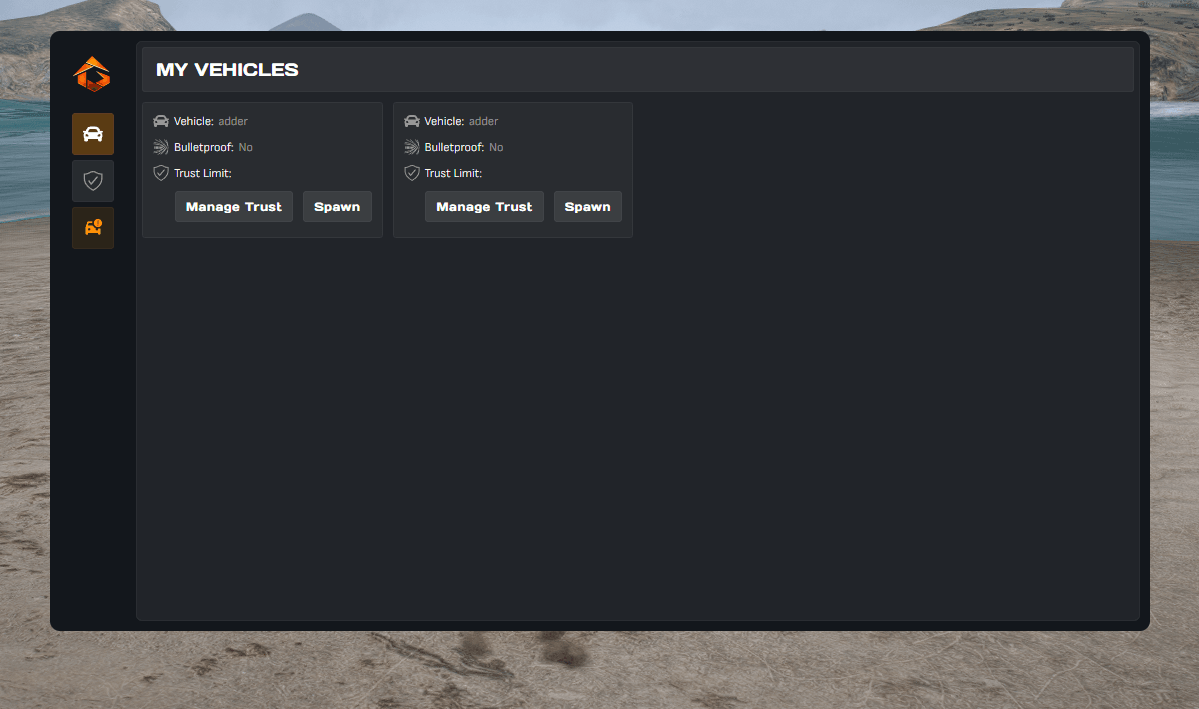
The Trust System provides configurable bypass permissions for trusted players, developers, administrators, and other selected groups.
Trusted users can be exempted from supported restrictions without receiving unrestricted access to every module.
The staff duty system is separate from department duty and is designed specifically for administrative teams.
Staff members can receive temporary ACE permissions while on duty, with those permissions removed automatically when they clock off.
The Auto-DV command provides a server-wide vehicle cleanup process with configurable countdown announcements.
Server owners can customize countdown intervals, warning messages, cleanup behavior, permissions, protected vehicles, and deletion conditions.
Players can submit emergency and non-emergency calls that are routed to available on-duty personnel.
Calls can include location information, map waypoints, caller details, notifications, cooldowns, and Discord logging.
The configurable watermark can display server branding and other supported information in a selected position on the player's screen.
Text, placement, visibility, styling, and update behavior can be adjusted through the module configuration.
Custom Discord Rich Presence displays server information on a player's Discord profile while they are connected.
The system supports configurable text, images, player counts, status information, and clickable buttons.
The included map blip system provides preconfigured location markers for important server destinations.
Server owners can add, remove, or modify blips using configurable coordinates, sprites, colors, names, scales, and visibility conditions.
The server-side hit registration module helps manage supported damage and hit-registration inconsistencies.
An optional godmode ignore setting prevents protected players from being affected by supported hit-registration corrections.
Automated chat messages can be broadcast at configurable intervals to display server rules, commands, announcements, community links, and other information.
Messages, timing, ordering, formatting, and visibility can be configured by the server owner.
gimicCore is built around modular, latency-aware client and server logic. Modules that are not required can be disabled to reduce unnecessary processing and network activity.
Lua configuration files are provided for supported systems, alongside documented events, triggers, and exports that developers can use for custom integrations.
Resource usage can remain around 0.00 ms while supported systems are idle, depending on server configuration, enabled modules, active features, and player environment.
The resource was developed from scratch for use within FiveM servers. It is distributed as a standalone roleplay resource rather than a preconfigured server base.
The package is intended to comply with FiveM's Terms of Service and Tebex's Creator Agreement and does not include the sale of gameplay advantages for real-world currency.